Rock & Roll vs. Conformity
How a new sound exposed the pressure to fit in during the 1950s.
Essential Question: “To what extent did American society value conformity in the 1950s?”
In the 1950s, Americans were pushed to fit in—politically, socially, and culturally. At the same time, rock & roll exploded into the mainstream, especially through mass media. According to the U.S. Census Bureau, the share of households with at least one TV grew from about 9% in 1950 to about 65% by 1955. When music and TV combined, rock & roll stopped being a small trend and became a national conversation about youth, morality, and what “normal” was supposed to look like.
America Before Rock & Roll
Setting the stage: the post-war era that rock & roll would disrupt
After World War II, the United States entered a period of economic growth and major social change. A huge baby boom helped create an enormous youth population: History.com notes that more than 4 million babies were born every year from 1954 to 1964. At the same time, Cold War fear shaped public life. The Miller Center explains that the ‘Red Scare’ reached a fever pitch between 1950 and 1954, creating a climate of suspicion that made many people feel safer blending in rather than standing out.
- Baby boom: 4M+ births/year (1954–1964).
- Red Scare (1950–1954) increased fear and suspicion.
What Rock & Roll Was
Definition, spread, and cultural meaning
The Library of Congress describes rock & roll as a name used for several related styles that became nationally popular with young people in the mid-1950s.
Encyclopaedia Britannica explains that rock & roll’s impact in the 1950s reflected teen spending power during the economic boom. That disposable income helped drive record sales and the rise of teen-focused radio and TV.
Rock & roll wasn’t only music—it became a symbol of youth identity. Adults often tried to control what teens listened to and how they behaved, but rock created a space where teenagers could claim their own style, dance, and attitudes.
Conformity vs. Nonconformity
Two sides of the same coin in 1950s America
- Cold War fear made blending in feel safer; being labeled ‘un-American’ could ruin careers.
- Mass media pushed ‘acceptable’ images of behavior and morality.
- Rock & roll was often criticized as corrupting youth and threatening social norms.
- When rock became mainstream TV content, adults debated how it should look and sound in public.
- Teens used rock & roll to build identity through fashion, slang, dance, and attitude.
- Rock drew heavily from African American rhythm & blues; its popularity challenged the idea of separate cultural worlds.
- The music’s energy and stage presence openly pushed against ‘quiet’ and ‘proper’ expectations.
- Even when adults resisted it, rock spread fast—showing that cultural change was happening anyway.
Key Takeaway: Conformity was strongly valued in the 1950s, but rock & roll exposed how many young people wanted something different—and how nervous adults were about that shift.
Case Study: Elvis Presley and National Backlash

Elvis Presley became a perfect example of the decade’s tension between fitting in and standing out. History.com reports that Ed Sullivan signed Elvis to an unprecedented $50,000 deal for three appearances. When Elvis debuted on The Ed Sullivan Show on September 9, 1956, about 60 million viewers—82.6% of the TV audience at the time—watched. That scale shows rock & roll wasn’t just a teen trend anymore; it was a national moment that forced adults and teens to react to the same culture at the same time.
History.com — Elvis on Ed SullivanWhy This Matters
- Rock became mainstream through TV.
- Adults criticized its style and sexuality.
- Youth attention proved the culture was shifting.
Timeline
Key moments in rock & roll history, 1952\u20131958
Rock & Roll Media Lab
Explore the sights and sounds of 1950s music culture
1950s Jukebox
Click to Play
Rockin' Shuffle (1955 style)
Radio Dial Filter
TV helped create a shared culture fast—millions watched the same shows and stars, which increased pressure to look ‘acceptable’ in public.
U.S. Census BureauImage Gallery
Visual snapshots of 1950s America
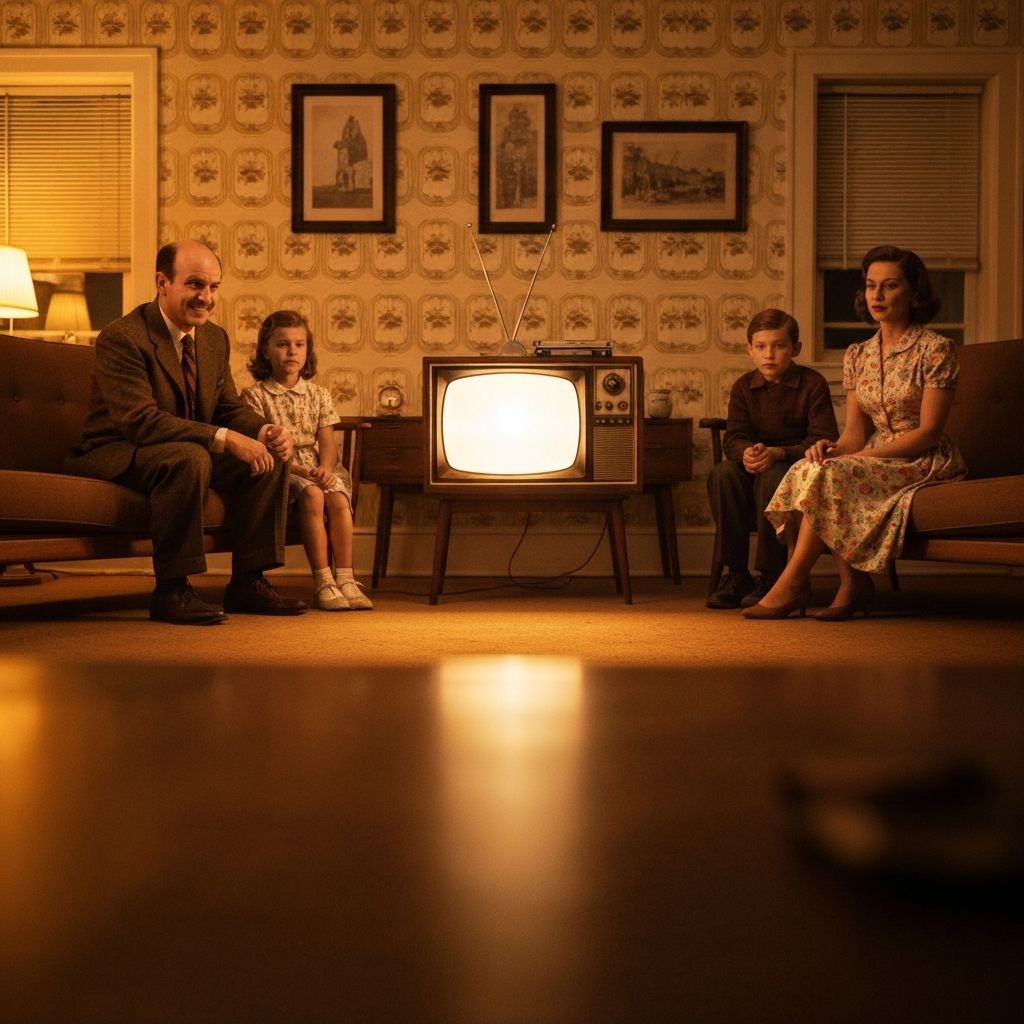
TV ownership surged (about 9% of households in 1950 to about 65% by 1955), making culture more shared—and more controlled.
Source
Britannica notes teen disposable income helped drive rock & roll’s growth and marketing.
SourceElvis on Ed Sullivan (1956): ~60 million viewers; 82.6% of the TV audience.
Source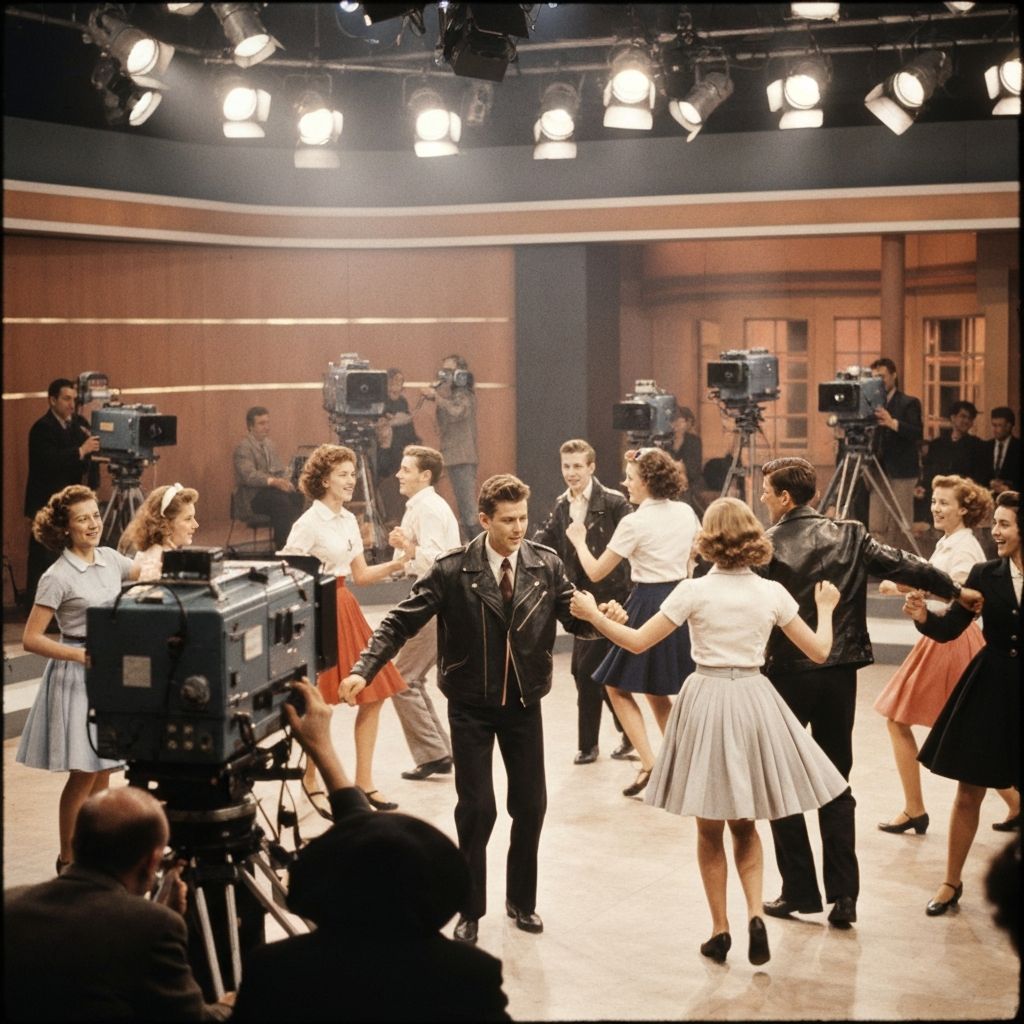
American Bandstand going national (1957) spread teen culture while presenting a ‘clean-cut’ image.
Source
Radio + records helped rock spread fast to a growing teen audience.
Conclusion
To what extent did American society value conformity in the 1950s?
Overall, American society valued conformity a lot in the 1950s. Cold War fear and suspicion encouraged people to blend in, and mass media rewarded ‘safe’ public images. But rock & roll showed the limits of that conformity: teens embraced it anyway, and the backlash proved adults were worried about changing values. So, even though conformity was the ideal, rock & roll revealed strong undercurrents of nonconformity that shaped the decade.